
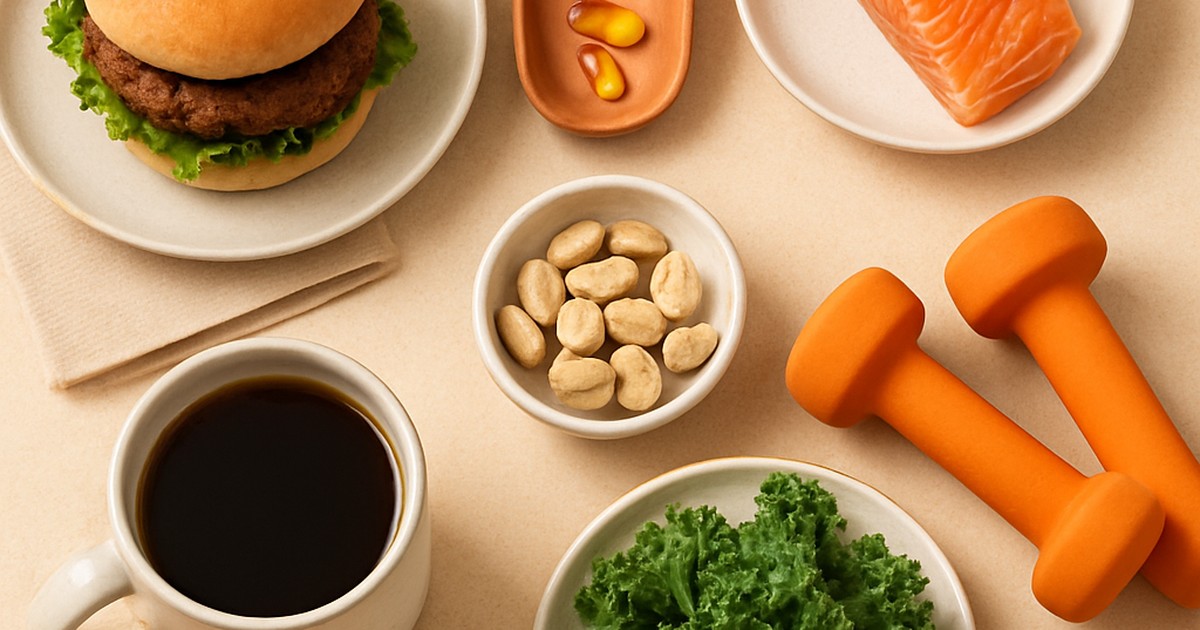
In an era where the quest for longevity often meets skepticism, mid-2026 offers a significant shift in how interventions for biological aging are evaluated. No longer merely a matter of promotional volume or celebrity endorsement, interventions are now scrutinized through the lens of rigorous randomized-controlled trials. This breakthrough ranking, informed by major trial readouts from 2025 and 2026, allows us to distinguish between what truly works and what is merely hype. From the undeniable benefits of exercise to the surprising efficacy of a plant-protein-emphasis diet, this article delves into the evidence-backed strategies that hold promise for slowing down the biological clock. We’ll explore how these interventions stack up, with exercise leading the pack, closely followed by dietary shifts and vitamin supplementation. By examining these findings, Ranked Daily provides a comprehensive, ranked guide for those eager to invest in their longevity with evidence-based strategies that align with public health wisdom.
Context
The field of biological-aging research has experienced a transformative evolution, guided by a growing body of scientific evidence that redefines our understanding of how we age. Historically, the conversation around anti-aging interventions has been dominated by anecdotal claims and less-than-robust studies. However, recent advancements, particularly those emerging from 2025 to 2026, have paved the way for a more empirical evaluation of strategies aimed at extending healthspan. Central to this evolution is the increasing reliance on randomized-controlled trials (RCTs), the gold standard for scientific inquiry. This methodological rigor allows for a clearer differentiation between interventions that genuinely impact biological aging and those that falter under scrutiny.
Today, the conversation is guided by a compilation of landmark studies that have emerged in recent years, each contributing a piece to the larger puzzle of longevity science. Notably, the University of Sydney’s May 2026 study, alongside findings from institutions like Tufts University, have unveiled key insights into how dietary patterns influence biological aging. Meanwhile, trials such as DO-HEALTH have focused on the effects of exercise, providing compelling evidence of its unmatched efficacy in slowing aging processes, particularly in older adults. These scientific endeavors represent a collaborative effort across the globe, underscoring the international nature of this research.

Attention has also turned to the societal implications of these findings. As the evidence base grows, it challenges long-held assumptions about aging and positions lifestyle interventions at the forefront of public health recommendations. This is noteworthy in a world where the aging population is rapidly expanding, necessitating interventions that are not only effective but also accessible and sustainable. Through this ranking, Ranked Daily underscores the alignment between the most substantiated interventions and traditional lifestyle advice, offering readers a roadmap to longevity grounded in scientific validation.
What Happened
The 2025 and 2026 trial readouts have brought clarity to the landscape of anti-aging interventions, emphasizing exercise as the most potent strategy. The DO-HEALTH trial, published this spring, demonstrated that a combined regimen of strength training and aerobic conditioning yields significant benefits across critical biological-aging biomarkers. This trial, which included adults over 70, highlighted exercise’s capacity to impact age-related decline effectively, setting a benchmark for other interventions.
Meanwhile, dietary interventions have emerged as a close contender in the longevity race. The University of Sydney’s May 2026 study revealed that a dietary shift emphasizing plant proteins can lead to a measurable reduction in biological age in as little as four weeks. Complementing this, Tufts University’s centenarian-offspring study, published in April, confirmed the durability of these effects over the long term. Together, these findings suggest that dietary modifications can play a pivotal role in the quest for longevity.

In addition to exercise and diet, vitamin supplementation has also garnered attention, particularly vitamin D. The VITAL Telomere sub-study found that a daily intake of 2,000 IU of vitamin D can preserve telomere length, equating to a three-year reduction in biological aging over a four-year period. Omega-3 fatty acids have shown similar benefits, especially when combined with vitamin D and exercise. Furthermore, the inclusion of a daily multivitamin was found to produce small but statistically significant effects on slowing epigenetic-clock aging. These trials collectively highlight that effective anti-aging strategies are increasingly backed by robust scientific evidence, paving the way for informed choices in personal health management.
Why It Matters
The implications of these findings are profound, not only for individual health but also for broader public policies geared towards aging populations. With exercise, diet, and vitamin supplementation now backed by strong evidence, public health authorities can better advocate for interventions that are both accessible and affordable. This shift towards evidence-based recommendations aligns public health initiatives with scientific advancements, potentially reducing healthcare costs associated with age-related diseases.
For the consumer, the availability of clear, evidence-backed strategies simplifies the often overwhelming landscape of anti-aging products and services. By focusing on interventions that are proven to work, individuals can make informed decisions that maximize health benefits while minimizing financial waste on ineffective solutions. These insights empower consumers to invest in their health proactively, aligning personal habits with scientifically validated practices.
Moreover, the convergence of scientific evidence and public health advice underscores the importance of a holistic approach to aging. Interventions that are most effective in slowing biological aging are those that emphasize overall well-being, such as regular physical activity, balanced nutrition, and adequate nutrient intake. This holistic perspective not only enhances individual health outcomes but also fosters a societal shift towards preventative healthcare, reducing the burden of age-related chronic conditions and enhancing quality of life across the lifespan.
How We Approached This
In crafting this article, Ranked Daily employed a rigorous editorial methodology to ensure the accuracy and relevance of the information presented. We prioritized insights derived from randomized-controlled trials, as these studies provide the most reliable evidence for evaluating the effectiveness of biological-aging interventions. Our editorial team carefully reviewed recent publications from leading scientific journals, cross-referencing findings to ensure consistency and validity.
Our publication’s lens focuses on delivering curated, evidence-backed content that empowers readers with the knowledge to make informed decisions. In this piece, we emphasized interventions with the strongest scientific backing, avoiding speculative or anecdotal claims. By highlighting the top interventions based on robust evidence, we aim to guide our audience toward strategies that offer real potential for enhancing longevity and well-being.
Frequently Asked Questions
What is the most effective anti-aging intervention?
According to the latest evidence from randomized-controlled trials, exercise, particularly a combination of strength training and aerobic conditioning, is the most effective intervention for slowing biological aging. This strategy impacts critical biomarkers and has been shown to benefit adults over 70, making it a cornerstone of anti-aging efforts.
How does a plant-protein diet affect aging?
Recent studies, including those from the University of Sydney and Tufts University, indicate that a diet emphasizing plant proteins can significantly reduce biological age. These studies show both short-term impacts, with measurable changes in as little as four weeks, and long-term benefits, suggesting a sustainable approach to dietary management in aging.
What role do vitamins play in anti-aging?
Vitamins, particularly vitamin D and omega-3 fatty acids, play a significant role in anti-aging strategies. The VITAL Telomere sub-study demonstrated that vitamin D can preserve telomere length, while omega-3s have shown additive effects when combined with other interventions like exercise. These nutrients contribute to maintaining cellular health and slowing the aging process.
As we look forward, the scientific community continues to unravel the complex mechanisms of aging, promising further advancements in the field. Ranked Daily remains committed to providing timely updates on these developments, ensuring that our readers are equipped with the knowledge to navigate the evolving landscape of longevity science. One thing remains clear: the path to a longer, healthier life is increasingly defined by evidence-based strategies that emphasize simplicity and accessibility.